Quick Identity Block
Note: This page avoids making medical diagnoses. It documents what the physician and CPSM wrote, what was requested, and what was refused.
Document Set
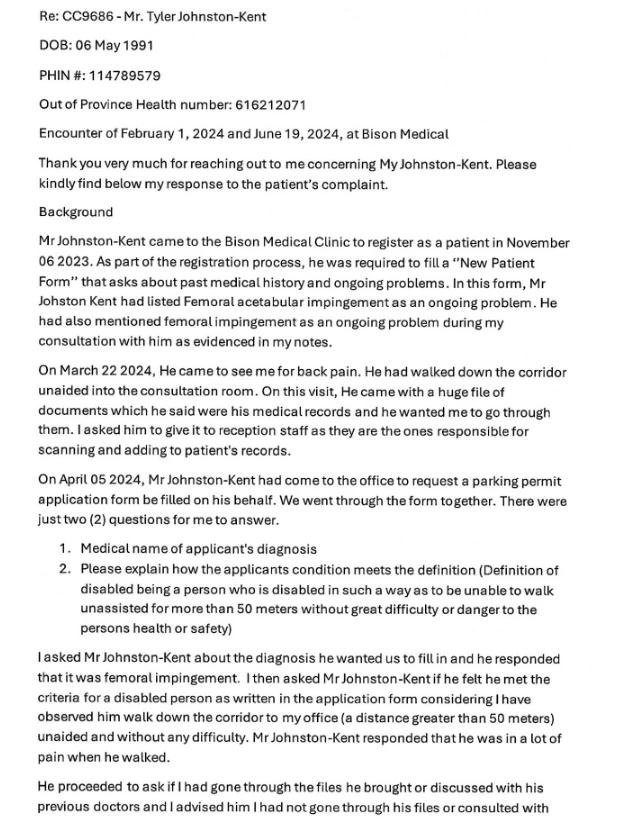
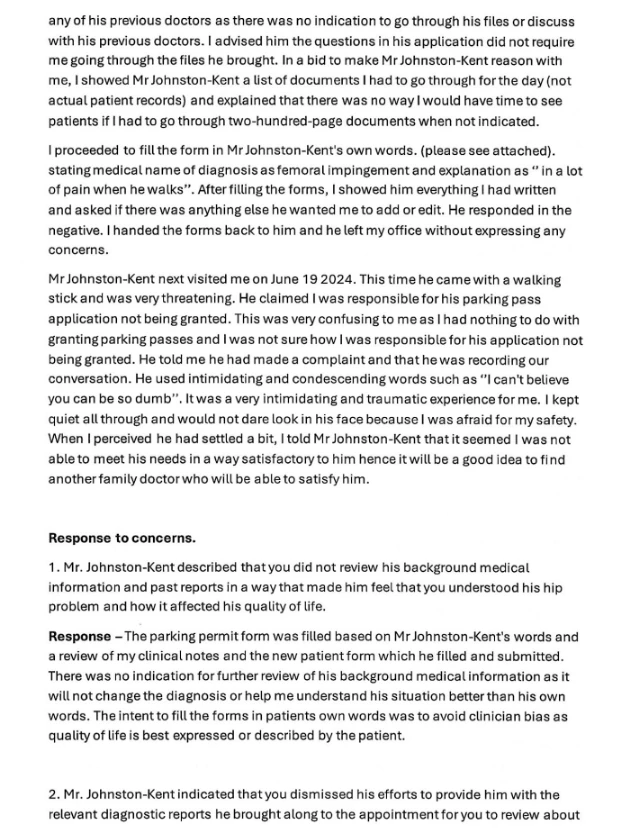
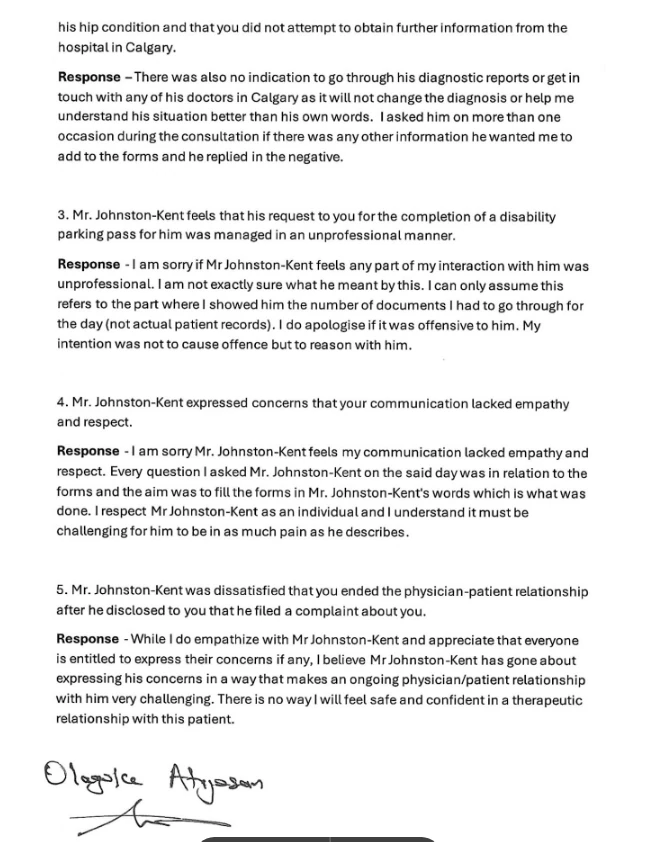
- Dr. Atijosan response letter (includes background narrative and responses to concerns).
- CPSM update letter dated August 16, 2024, from CPSM providing process steps and contact options.
- Patient attachment set (to be linked here as PDFs or images once mounted in your site Resources).
Timeline (as stated in letters)
- Nov 6, 2023: Patient registered at Bison Medical Clinic, new patient form noted hip issues including femoroacetabular impingement or femoral impingement (as written in the physician response).
- Mar 22, 2024: Visit noted in physician response. Patient brought a large file of documents for records review and asked for them to be considered. Physician response states records were not reviewed and were directed to reception for scanning.
- Apr 5, 2024: Visit regarding a parking permit application form. Physician response states the form was completed using patient wording and that records review was not performed.
- Jun 19, 2024: Visit described by physician as involving conflict, recording disclosure, and safety concerns. Physician response states relationship termination was suggested.
- Aug 16, 2024: CPSM update letter sent to patient with complaint handling steps and deadlines.
This timeline is a summary of stated dates. The page should later be upgraded with the exact quoted lines and page references once the documents are mounted as PDFs.
Key Statements (direct quotes)
These are the core statements that define the dispute. Replace the placeholders with verbatim excerpts from your scanned documents once mounted.
Issues Raised (record-based, non-diagnostic)
- Records not reviewed: The physician response asserts there was no indication to review prior diagnostic reports or consult prior physicians, even though the patient brought records and requested consideration.
- Evidence substitution: The response indicates reliance on brief observation (walking) rather than longitudinal documentation for functional limitation and pain reports.
- Administrative gatekeeping: The response describes form completion as “in patient’s own words” while simultaneously declining to review objective medical evidence the patient offered.
- Complaint-triggered termination: The response describes termination of relationship after the complaint disclosure, framed as safety or relationship viability.
- Process containment: The CPSM letter states they will not contact other physicians for background history, placing the full burden of medical history transmission on the patient.
This section stays strictly within what documents state and what actions were taken. It does not assign criminal intent. It documents refusal, reliance choices, and procedural outcomes.
Questions for CPSM or Review Panels
- Why was longitudinal diagnostic evidence not reviewed despite the patient offering it directly during a clinical interaction?
- What standard of care applies when a patient presents with complex, longstanding documented conditions and requests records-based assessment?
- Is it acceptable practice to deny functional limitation based on a single observation when chronic pain and variable capacity are asserted?
- What documentation is expected when a physician claims patient threats or abusive behavior, and how is contemporaneous record reliability assessed?
- What safeguards exist when clinic processes shift responsibility to reception scanning and prevent the physician from reviewing relevant records?
- How does CPSM evaluate termination of the physician-patient relationship when a complaint is disclosed or in progress?
- Why does CPSM decline contacting other physicians directly when the dispute involves refusal to review prior records?
- What accommodations are expected when administrative burdens predictably disadvantage patients with executive function disability, including ADHD?
- What corrective actions or standards changes are recommended to prevent this pattern from recurring?
Public Note
This archive exists because medical outcomes depend on information quality. When records are refused, when longitudinal evidence is ignored, and when patients are pushed into procedural loops, accountability requires documentation.
If you are referenced in these documents and believe anything shown here is inaccurate, the remedy is simple: provide record-based corrections that can be appended alongside the original documents.
This page is part of a larger record archive hosted on Formant.
Return to formant.ca